



Posting from the afterlife? Meta patents AI 'digital stand-ins'
Now, keeping your followers doesn't have to be a matter of life and death.

Could your Instagram, Facebook or WhatsApp presence keep “showing up” after you’re gone?
Meta has been granted a patent describing a system that uses a large language model to simulate a person’s social activity when they’re absent, including if they’re deceased.
The reporting was first published by Business Insider.
The patent says the model could “simulate” a user’s behaviour on a social network, responding to posts from real people and maintaining engagement.
What the patent proposes
The document outlines training an AI on “user-specific” data, including historical activity such as posts, comments and likes, to create a digital stand-in that behaves like the account holder.
In practice, the system could keep an account active by liking, commenting and replying to direct messages. It also references the ability to simulate audio or video calls.
Andrew Bosworth, Meta’s chief technology officer, is listed as the primary inventor, and the patent was first filed in 2023, according to Business Insider.


The leading media trade publication in Australia.
Get our top stories straight to your inbox daily by signing up to our Newsletter
By providing your information, you agree to our Terms of Use and our Privacy Policy. We use vendors that may also process your information to help provide our services.
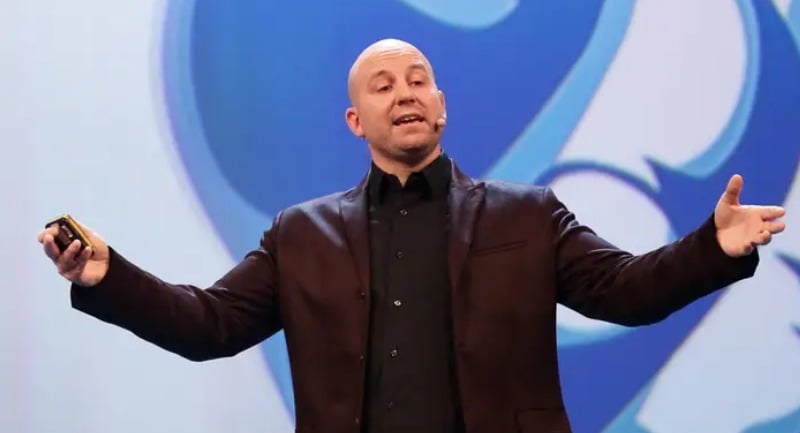 Meta's Chief Technology Officer, Andrew Bosworth
Meta says it’s not moving ahead
A Meta spokesperson told the publication the company has “no plans to move forward” with the technology, adding that patents are often filed to protect or disclose concepts that may never be built.
Why it matters for creators and platforms
The patent positions the idea as a way to reduce the impact of a user's disappearance from a network, whether due to a long break or death, on followers' experience.
For creators and influencers, the concept suggests an “always-on” account that can sustain audience engagement during downtime.
But it also raises obvious questions for advertisers, agencies, and platforms about disclosure, authenticity, and brand safety when an account is being “performed” by a model rather than the person.
Grief tech is already a category
Tools that aim to preserve or recreate aspects of a person after death are often grouped under labels like “grief tech”, “death bots”, or “ghost bots”. Business Insider notes a number of startups have emerged in the space, and points to Microsoft’s earlier patent work on chatbots that can mimic specific people.
Meta, for its part, has long offered “legacy contact” and memorialisation options on Facebook, allowing someone you nominate to manage limited parts of your profile after death.
In a 2023 interview with Lex Fridman, Mark Zuckerberg said there “may be ways” that interacting with memories could help grieving people, while also warning that the idea could become “unhealthy”.
Ethical and commercial questions
Business Insider reported that Edina Harbinja, a professor at the University of Birmingham specialising in digital rights and post-mortem privacy, flagged a mix of legal, social, and philosophical issues and suggested the commercial incentive is clear: more engagement and more data.
Separately, Joseph Davis, a sociology professor at the University of Virginia, told Business Insider he was concerned about how simulations might shape the grieving process, arguing that grief involves facing loss rather than blurring it.
What happens next
For now, the key takeaway is that Meta has a granted patent, not a product announcement, and says it does not intend to proceed.
Still, as generative AI becomes more embedded across consumer platforms, the patent is a signal of where product teams are at least exploring.
More from Mediaweek
The leading media trade publication in Australia.
Get our top stories straight to your inbox daily by signing up to our Newsletter
By providing your information, you agree to our Terms of Use and our Privacy Policy. We use vendors that may also process your information to help provide our services.


