



Meta enhances brand suitability controls with new third-party content block lists
Will Easton: 'Ensuring brand safety and suitability for our advertisers continues to be a priority for Meta.'

Meta’s commitment to ensuring brand safety and suitability for advertisers is stronger than ever. As part of the company’s ongoing efforts to provide enhanced tools for businesses, Meta has introduced a new feature: third-party content block lists. This solution gives advertisers more control over where their ads appear on Facebook and Instagram Feed and Reels.
Will Easton, managing director of Meta ANZ, said: “Ensuring brand safety and suitability for our advertisers continues to be a priority for Meta, and for years, we’ve invested in this area with a robust range of tools. Third-party content block lists are the latest tool to give advertisers even more control over their brand suitability. We will continue to uphold industry standards and invest in new tools to meet the needs of Australian advertisers.”
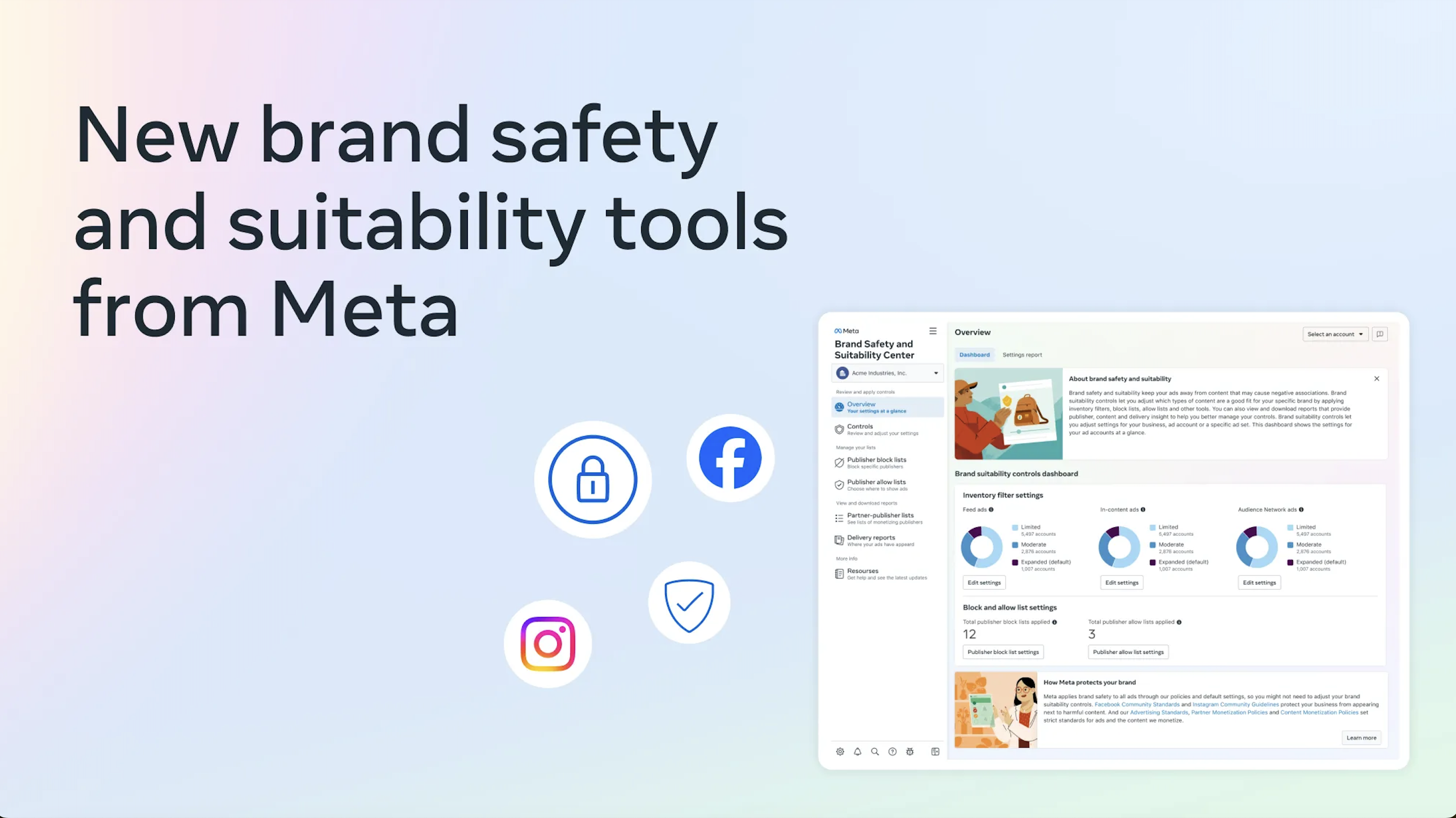 New brand safety tools from Meta.
More control for advertisers
This new feature follows Meta’s extensive testing with Integral Ad Science (IAS) and now includes DoubleVerify and Zefr as partners, alongside IAS. These third-party content block lists offer businesses increased control over the specific categories in which their ads appear. By working directly with Meta’s Business Partners, businesses can fine-tune their content preferences and block unwanted adjacent content.
These content block lists are a valuable addition to the existing inventory filter system, enabling advertisers to block specific categories of content while still maintaining precision in ad targeting. This new solution allows for greater flexibility and enhanced brand safety, ensuring that ads align with a business’s unique suitability requirements.
“Businesses should ultimately decide what their own suitability preferences are,” said Easton. “Partners are free to create blocklists for any category, so long as they adhere to Meta’s Discriminatory Practices policy and follow reporting standards. The solution supports 34 languages, ensuring scalability for global brands.”
How the third-party content block lists work
Advertisers can select which categories they want to exclude, either using the new third-party content block lists or in combination with Meta's existing inventory filter. The decision to block content categories is made between businesses and their Meta Business Partner, ensuring flexibility in content moderation.


The leading media trade publication in Australia.
Get our top stories straight to your inbox daily by signing up to our Newsletter
By providing your information, you agree to our Terms of Use and our Privacy Policy. We use vendors that may also process your information to help provide our services.
The introduction of these block lists provides additional peace of mind to advertisers by giving them more control over content adjacency. It’s a tool that can be used alongside the already available suite of brand safety measures or independently for extra protection.
Since testing began at the end of 2024, the feature is now rolling out to advertisers in Australia from 14 February, 2025. For those looking to learn more, Meta has provided detailed information about this new solution on its platform.
Meta’s existing brand safety and suitability controls
This latest update is just one part of Meta’s comprehensive approach to brand safety. Meta already offers a variety of tools to help advertisers manage brand preferences, such as:
• Inventory filters: Advertisers can choose from three settings for ad placement – Expanded, Moderate, and Limited. Each setting adjusts the level of content sensitivity to ensure ad adjacency aligns with brand values.
1. Expanded Inventory: Ads will appear alongside content that meets Meta’s content monetisation policies, maximising reach.
2. Moderate Inventory: Excludes highly sensitive content, which may reduce reach and increase costs.
3. Limited Inventory: Offers the strictest exclusions, including additional sensitive content and live videos, lowering reach and potentially increasing costs.
• Topic exclusions & block lists: These features enable businesses to exclude ads from appearing alongside content that they deem unsuitable for their brand, giving advertisers further control. • Monetisation Policies: Content that violates Meta’s Community Standards is not eligible for ad adjacency, ensuring compliance with brand safety standards.
Partnerships with industry leaders
To further bolster brand safety efforts, Meta collaborates with leading third-party brand safety and suitability verification partners, including Ad Science, DoubleVerify, IAS, and Zefr. These partnerships allow for enhanced verification and provide advertisers with more assurance in the content their ads are placed alongside.
Easton noted, “We’re committed to ensuring that Meta remains a trusted platform for advertisers, and we will continue working with our partners to refine and expand the tools available to meet evolving brand safety needs.”
More from Mediaweek
The leading media trade publication in Australia.
Get our top stories straight to your inbox daily by signing up to our Newsletter
By providing your information, you agree to our Terms of Use and our Privacy Policy. We use vendors that may also process your information to help provide our services.


